
|
Getting your Trinity Audio player ready...
|
Choosing the right software development methodology is crucial for any startup. Two popular approaches are Agile and Waterfall. This article compares these methodologies to help you decide which is best for your startup.
Introduction
When launching a startup, time-to-market and adaptability are often critical. The development methodology you choose can significantly impact your project’s success. Let’s explore the key differences between Agile and Waterfall methodologies.
Understanding Agile Methodology
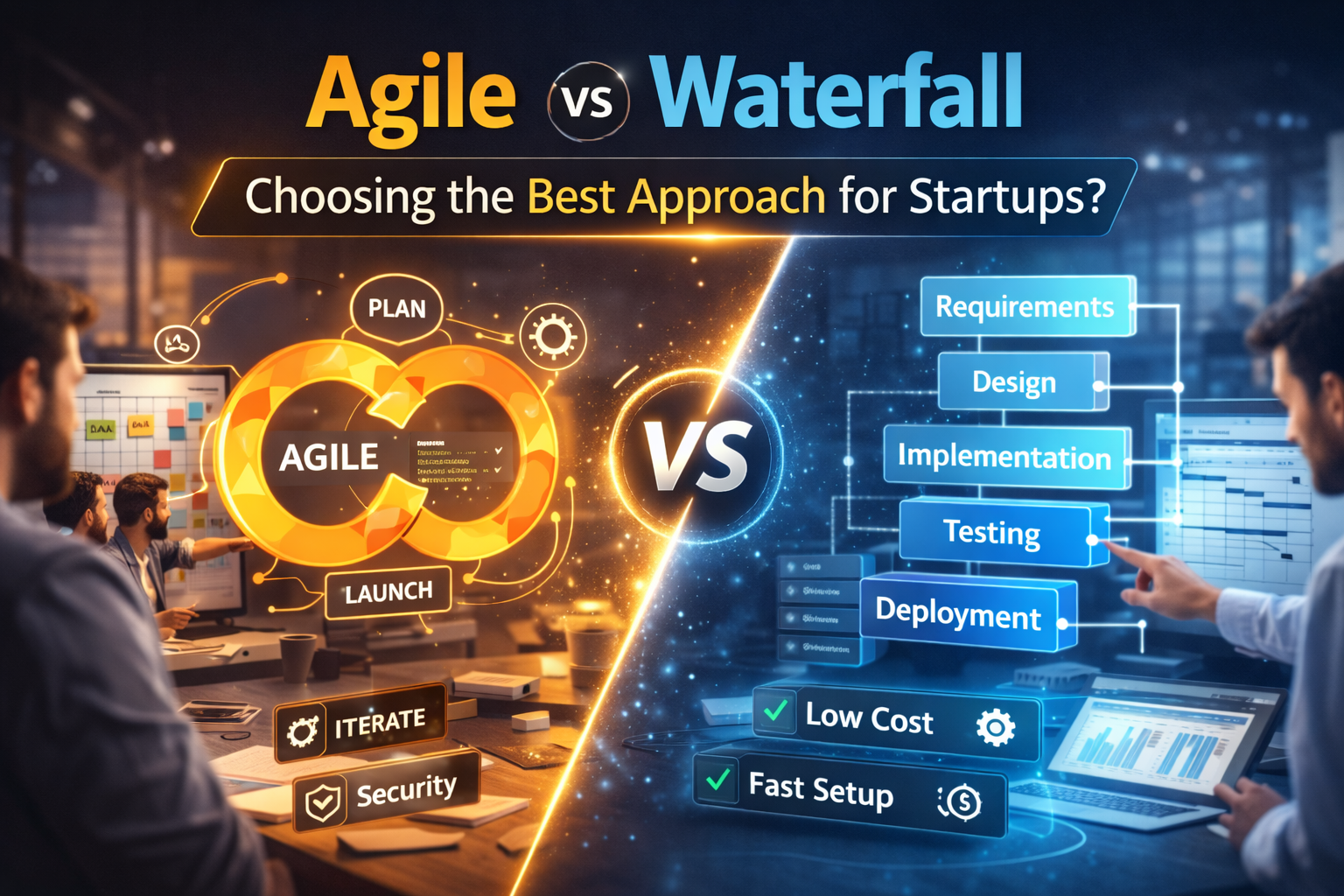
Agile is an iterative approach to software development. It emphasizes flexibility, collaboration, and customer feedback. Agile projects are broken down into small, manageable units called sprints, typically lasting 1-4 weeks.
Key Characteristics of Agile:
- Iterative Development: Work is done in short cycles, allowing for frequent reassessment and adaptation.
- Continuous Feedback: Regular customer and stakeholder involvement ensures the product meets their needs.
- Cross-functional Teams: Teams are self-organizing and include members with diverse skills.
- Adaptive Planning: Plans can be adjusted based on changing requirements or market conditions.
Understanding Waterfall Methodology
Waterfall is a linear, sequential approach to software development. It follows a strict sequence of phases, where each phase must be completed before moving to the next.
Key Characteristics of Waterfall:
- Sequential Phases: Requirements → Design → Implementation → Testing → Deployment → Maintenance
- Comprehensive Documentation: Detailed documentation is created at each phase.
- Fixed Scope: Once requirements are set, they rarely change during development.
- Specialized Teams: Different teams handle different phases of the project.
Comparing Agile and Waterfall for Startups
Now that we understand both methodologies, let’s compare them in the context of startups.
Flexibility and Adaptability
Agile: Highly adaptable to changes. Startups can pivot quickly based on market feedback.
Waterfall: Rigid structure makes it difficult to accommodate changes once development has started.
Winner for Startups: Agile
Time-to-Market
Agile: Faster initial releases with minimum viable products (MVPs).
Waterfall: Longer development cycles before the first release.
Winner for Startups: Agile
Cost Management
Agile: Costs can be spread out over iterations, but may be higher due to continuous development.
Waterfall: Costs are easier to estimate upfront, but changes can be expensive.
Winner for Startups: Depends on the project
Team Structure and Skills
Agile: Requires self-motivated, cross-functional teams.
Waterfall: Works well with specialized, phase-based teams.
Winner for Startups: Agile (for most cases)
Risk Management
Agile: Risks are identified and addressed early through frequent iterations.
Waterfall: Risks may not surface until late in the development process.
Winner for Startups: Agile
When to Choose Waterfall for Your Startup
While Agile is generally better for startups, there are scenarios where Waterfall might be appropriate:
- When working on projects with extremely stable and well-defined requirements
- When compliance and documentation are critical (e.g., medical devices, aerospace)
- When outsourcing to teams in different time zones
Best Practices for Agile in Startups
If you choose Agile, consider these best practices:
- Start with Scrum or Kanban frameworks
- Use tools like Jira or Trello for project management
- Implement continuous integration and continuous deployment (CI/CD)
- Foster a culture of open communication and collaboration
- Regularly review and adapt your processes
Conclusion
For most startups, Agile methodology offers the flexibility, speed, and adaptability needed to succeed in a fast-paced, uncertain market. However, the choice between Agile and Waterfall should be based on your specific project requirements, team structure, and business goals.
Remember, the best methodology is one that your team can effectively implement and that aligns with your startup’s vision. Consider starting with Agile and be prepared to adjust your approach as your startup grows and evolves.