
|
Getting your Trinity Audio player ready...
|
MVP vs Full Product: When to Launch Your Idea
In the fast-paced world of product development, entrepreneurs and businesses face a critical decision: should they launch with a Minimum Viable Product (MVP) or invest time and resources into a full-featured product? This dilemma has been at the forefront of countless boardroom discussions and startup strategies. In this comprehensive guide, we’ll explore the nuances of both approaches, helping you make an informed decision for your next venture.
Understanding MVP and Full Product
Before we dive into the comparison, let’s clarify what we mean by MVP and Full Product:
MVP (Minimum Viable Product)
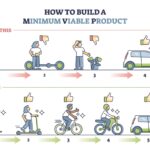
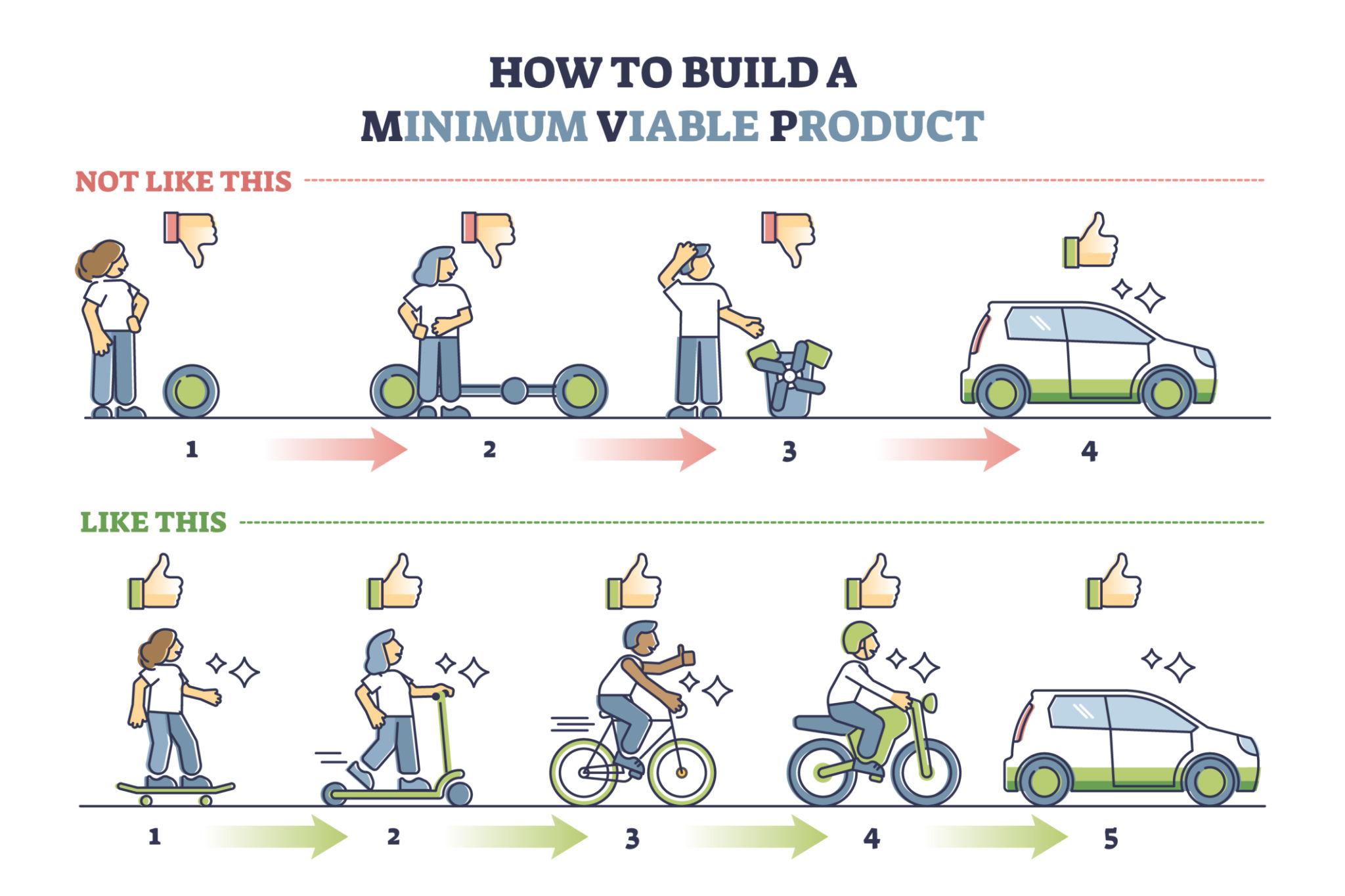
An MVP is the most basic version of your product that still delivers core value to users. It’s stripped down to essential features, allowing you to test your idea in the market with minimal investment.
Key characteristics of an MVP:
- Core functionality only
- Quick to develop and launch
- Low cost
- Ideal for testing assumptions and gathering user feedback
Full Product
A full product is a complete, polished version of your idea with all intended features and functionalities. It’s often more refined, with attention to user experience, design, and comprehensive features.
Key characteristics of a full product:
- Comprehensive feature set
- Refined user experience
- Higher development cost and time investment
- Ready for wide-scale market adoption
When to Choose an MVP
Launching with an MVP can be advantageous in several scenarios:
1. Testing a Novel Concept
If you’re introducing a groundbreaking idea or entering a new market, an MVP allows you to gauge interest and validate your concept without significant upfront investment.
Example: Dropbox launched with a simple explainer video MVP, gauging interest before building their complex file-sharing infrastructure.
2. Limited Resources
Startups and small businesses often operate with constrained budgets and tight timelines. An MVP approach allows for a quicker launch with less capital.
3. Highly Competitive Markets
In fast-moving industries, getting to market quickly can be crucial. An MVP lets you establish a presence and start iterating based on real user data.
4. Uncertain User Needs
If you’re not entirely sure about your target audience’s needs, an MVP allows you to gather insights and pivot if necessary.
When to Opt for a Full Product
There are situations where investing in a full product from the start makes more sense:
1. High-Stakes Industries
In sectors like healthcare, finance, or enterprise software, a polished, comprehensive product may be necessary to meet regulatory requirements and gain user trust.
2. Network Effects are Crucial
For products that rely heavily on network effects (e.g., social media platforms), a full product might be necessary to provide enough value for initial users to invite others.
3. Complex User Experience
If your product’s value is tied to a seamless, sophisticated user experience, an MVP might not adequately represent your vision.
4. Strong Brand Reputation
Established companies with loyal customer bases might benefit from launching a full product to maintain their reputation for quality.
The Hybrid Approach: MVP with Planned Scalability
Many successful products have taken a middle ground, launching with an MVP but with a clear roadmap for scaling and adding features. This approach combines the benefits of quick market entry with the potential for comprehensive functionality.
Example: Instagram started as a simple photo-sharing app but had plans to evolve into the feature-rich platform it is today.
Key Considerations for Your Decision
When deciding between an MVP and a full product launch, consider the following factors:
1. Market Readiness
- Is there a clear demand for your product?
- How quickly are competitors moving in your space?
2. Technical Feasibility
- Can your core idea be implemented with current technology?
- Are there any technical hurdles that might delay a full product launch?
3. User Expectations
- What’s the minimum functionality users need to see value?
- How forgiving is your target audience likely to be?
4. Funding and Resources
- What’s your budget for initial development and launch?
- Do you have the resources to support a full product post-launch?
5. Long-term Vision
- How does your launch strategy align with your 5-year product vision?
- Are you prepared to iterate quickly based on user feedback?
Real-World Success Stories
Let’s look at how some well-known companies approached their launches:
Airbnb
Started with a simple website offering air mattresses in founders’ apartments. This MVP allowed them to test the concept of peer-to-peer lodging before scaling up.
Uber
Launched in San Francisco with just a black car service app. They validated the ride-hailing model before expanding to different vehicle types and geographic locations.
Began as a Harvard-only social network before expanding to other colleges and eventually the general public. This gradual rollout allowed them to manage growth and refine features.
Conclusion
The decision between launching an MVP or a full product is not a one-size-fits-all solution. It requires careful consideration of your market, resources, and long-term goals. An MVP offers the advantage of quick market entry and learning from real users, while a full product can make a stronger initial impression and potentially capture more market share from the start.
Ultimately, the best approach depends on your specific circumstances. Many successful companies have found a balance, launching with a focused MVP but with a clear vision for a more comprehensive product. Whatever you choose, remember that product development is an iterative process. Be prepared to listen to your users, adapt quickly, and continuously improve your offering.
By carefully weighing the pros and cons of each approach and considering your unique situation, you can make an informed decision that sets your product up for success in the competitive marketplace.