

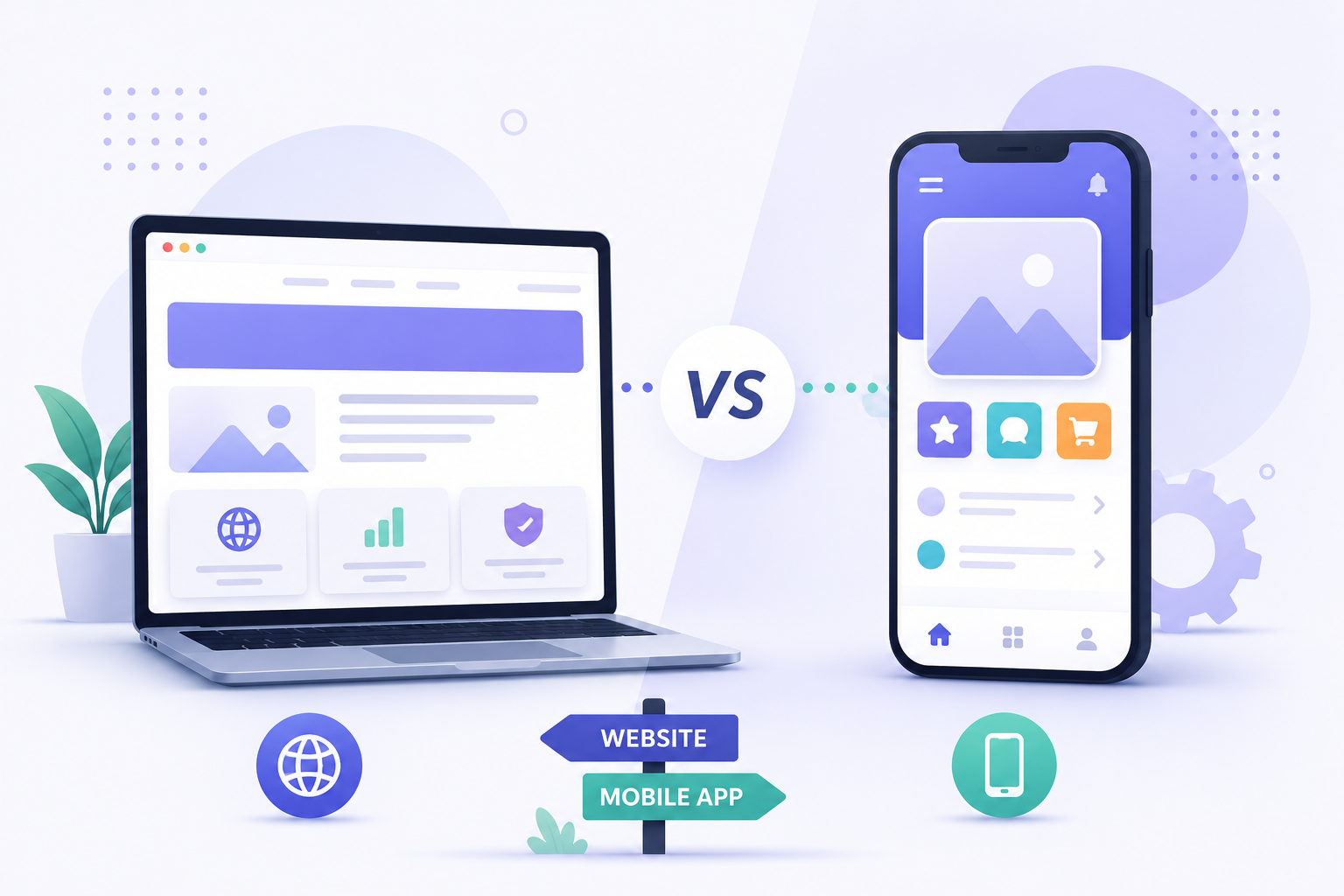
# Website vs Mobile App: What Should You Build First?Introduction
Deciding whether to build a website or a mobile app first is a critical decision for any business or project. Both platforms offer unique advantages and challenges. This guide explores the key differences, use cases, and factors to consider when choosing between a website and a mobile app. The goal is to help you determine which option aligns best with your goals, resources, and audience. —
Why Build a Website First?
Advantages of a Website
A website is often the foundation of online presence. It is accessible to everyone with an internet connection and doesn’t require users to download or install anything. Here are some key benefits: – Cost-effective: Websites are generally cheaper to develop and maintain compared to apps. – Wide reach: Anyone with a browser can access your site, regardless of their device. – Easier to scale: Adding new features or content to a website is typically simpler than updating an app.
Use Cases for a Website
Websites work well for: – Online stores: Platforms like Shopify or WooCommerce allow businesses to sell products without an app. – Content sharing: Blogs, portfolios, or news sites rely on websites to deliver information. – Lead generation: Landing pages or contact forms can capture user data efficiently.
Example: A Local Bakery
A local bakery might start with a website to showcase its menu, location, and online orders. This avoids the complexity of building an app while still reaching customers in their area. —
Why Build a Mobile App First?
Advantages of a Mobile App
Mobile apps offer a more personalized and immersive experience. They can leverage device features like GPS, cameras, or push notifications. Key benefits include: – Higher engagement: Apps keep users connected through notifications and in-app features. – Offline functionality: Some apps work without an internet connection. – Brand loyalty: A well-designed app can strengthen customer relationships.
Use Cases for a Mobile App
Mobile apps are ideal for: – Gaming or entertainment: Apps like Pokémon GO or Netflix deliver interactive experiences. – Productivity tools: Apps like Trello or Slack streamline tasks for users on the go. – Service-based businesses: Uber or DoorDash rely on apps to manage bookings and payments.
Example: A Fitness Tracker
A fitness app can track workouts, provide custom workouts, and sync with wearable devices. This level of functionality is harder to achieve with a website. —
Which One Should You Build First?
Factors to Consider
The decision depends on your specific needs. Ask yourself: 1. What is your primary goal? – If your goal is to share information or sell products, a website might suffice. – If you need advanced features or user interaction, an app could be better. 2. Who is your target audience? – If your audience primarily uses mobile devices, an app might be more effective. – If your audience is diverse or includes desktop users, a website could be safer. 3. What is your budget and timeline? – Websites are often faster and cheaper to launch. – Apps require more time and resources for development and maintenance. 4. Do you need offline access or device-specific features? – Apps can use GPS, sensors, or push notifications, which websites cannot.
Scenarios Where One Outperforms the Other
– Start with a website if you’re a small business with limited resources. – Start with an app if you’re targeting a tech-savvy audience or need advanced features. —
Key Considerations for Your Decision
1. Business Objectives
Align your choice with your core mission. For example: – If you want to build a brand, a website can act as a hub for your online presence. – If you need to automate processes, an app might offer more capabilities.
2. User Experience (UX)
– Websites are easier to navigate for users unfamiliar with apps. – Apps provide a more tailored experience but require users to install them.
3. Maintenance and Updates
– Websites need regular updates but are simpler to manage. – Apps require app store approvals and updates, which can be more complex.
4. Market Trends
– Mobile usage is growing, but websites remain essential for SEO and accessibility. – A hybrid approach (both a website and app) might be ideal for some businesses. —
Conclusion
Choosing between a website and a mobile app first isn’t a one-size-fits-all decision. It depends on your goals, audience, budget, and the features you need. If you’re unsure, start with a website to establish your online presence. If your vision requires app-specific functionality, prioritize building an app. Ultimately, the best choice is the one that aligns with your unique needs and sets the stage for growth.